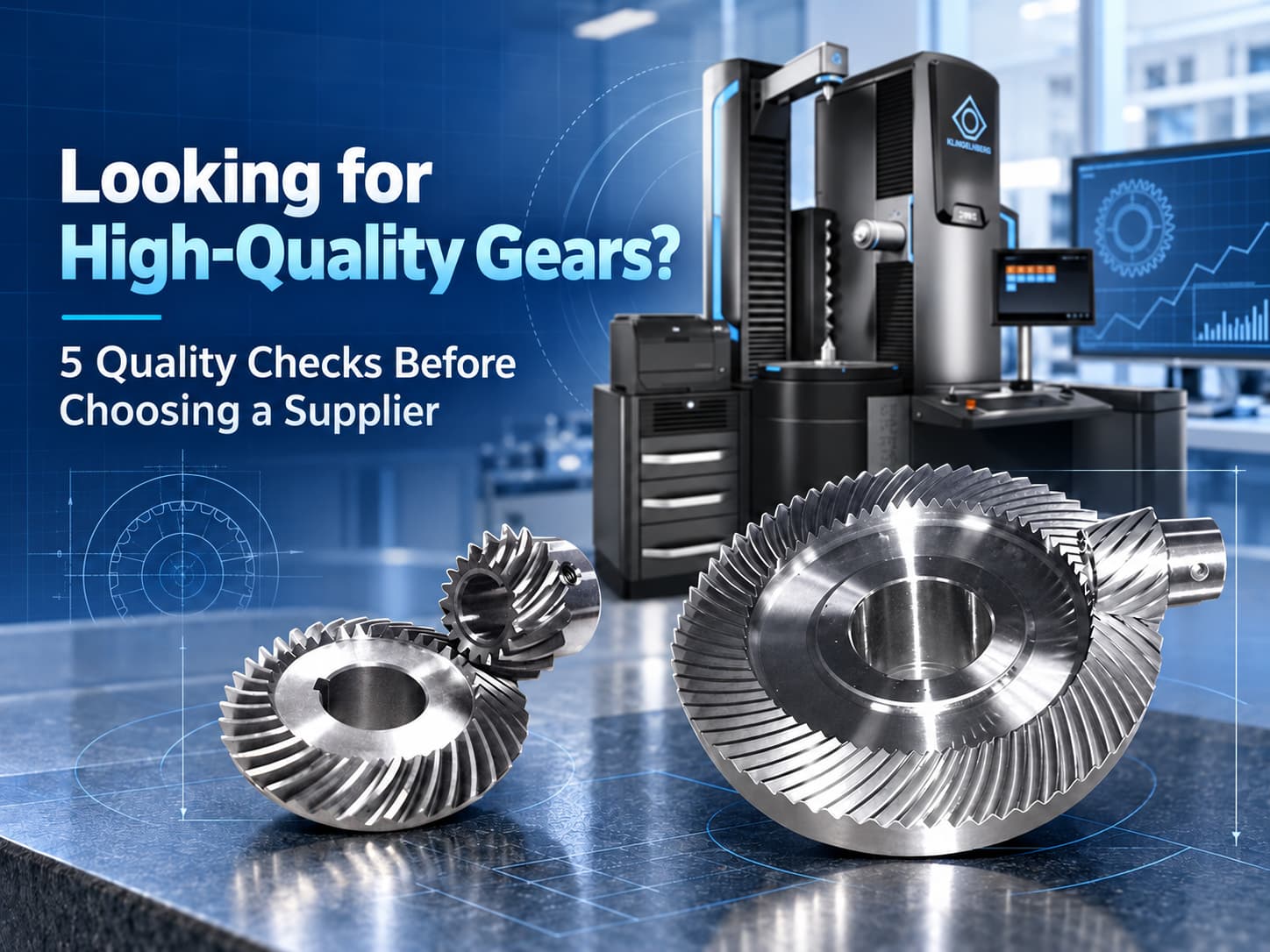
Looking for High-Quality Gears? 5 Quality Checks to Make Before Choosing a Supplier
2026.09.16
Looking for high-quality gears? Learn how to check tooth accuracy, materials, dimensions, meshing performance, and supplier quality records before buying.
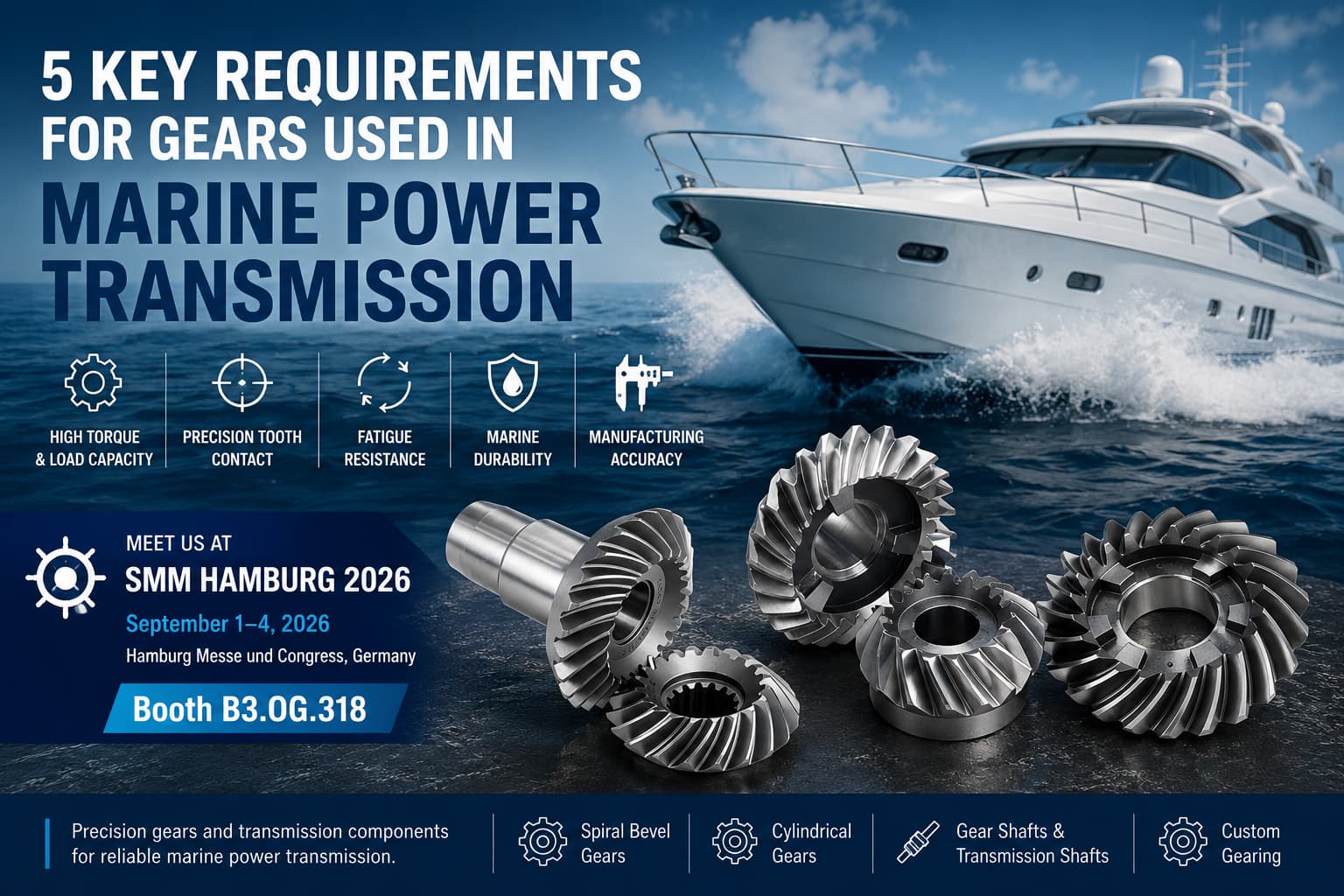
5 Key Requirements for Gears Used in Marine Power Transmission
2026.08.25
Marine power transmission systems operate under conditions that can be very different from those of conventional industrial machinery. From outboard engines and propulsion systems to other marine transmission equipment, gears must transfer power reliably while handling high torque, continuous operation, vibration, and exposure to challenging marine environments.
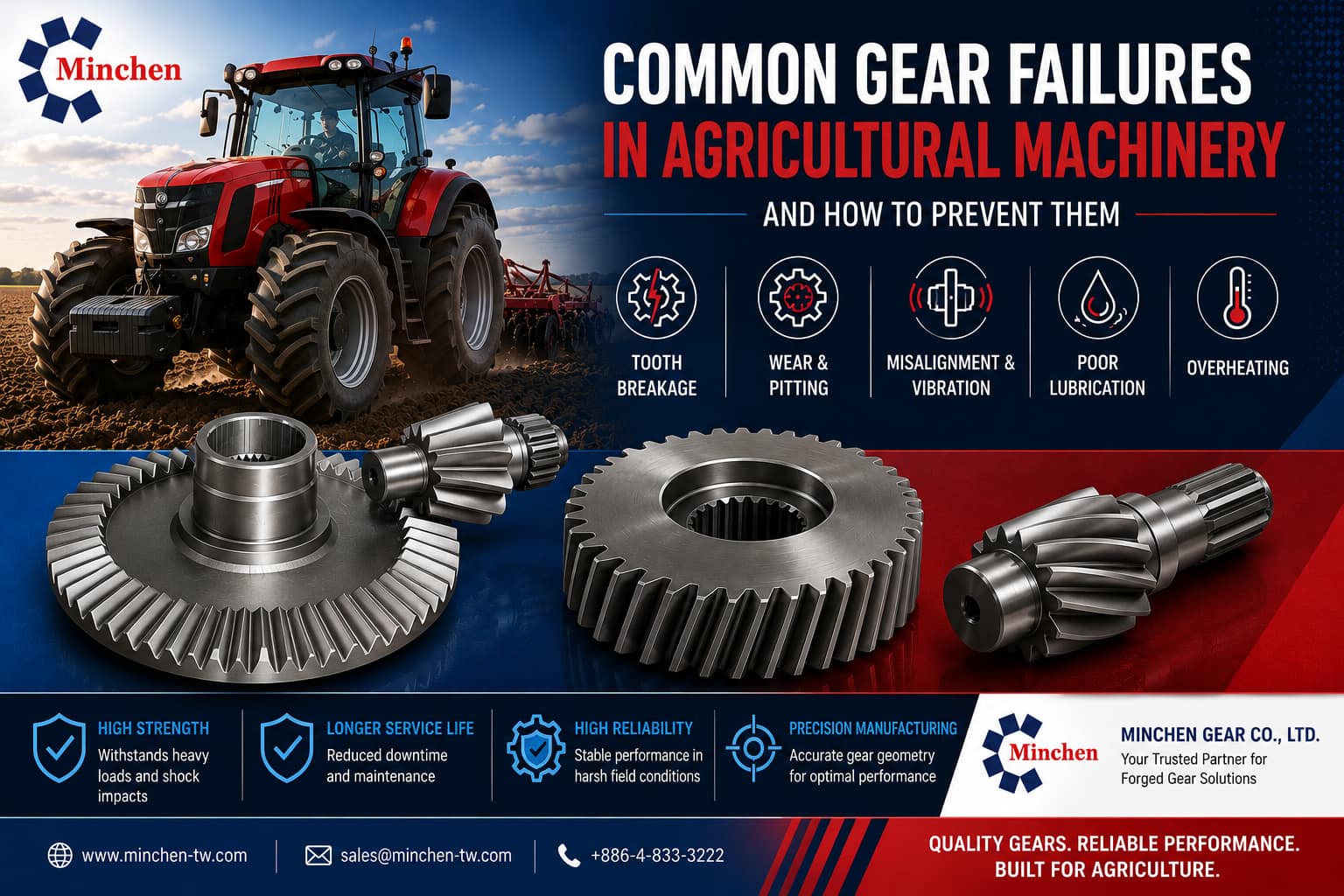
Common Gear Failures in Agricultural Machinery and How to Prevent Them
2026.07.20
In this article, we'll explore the most common gear failures found in agricultural machinery and discuss practical ways to prevent them.
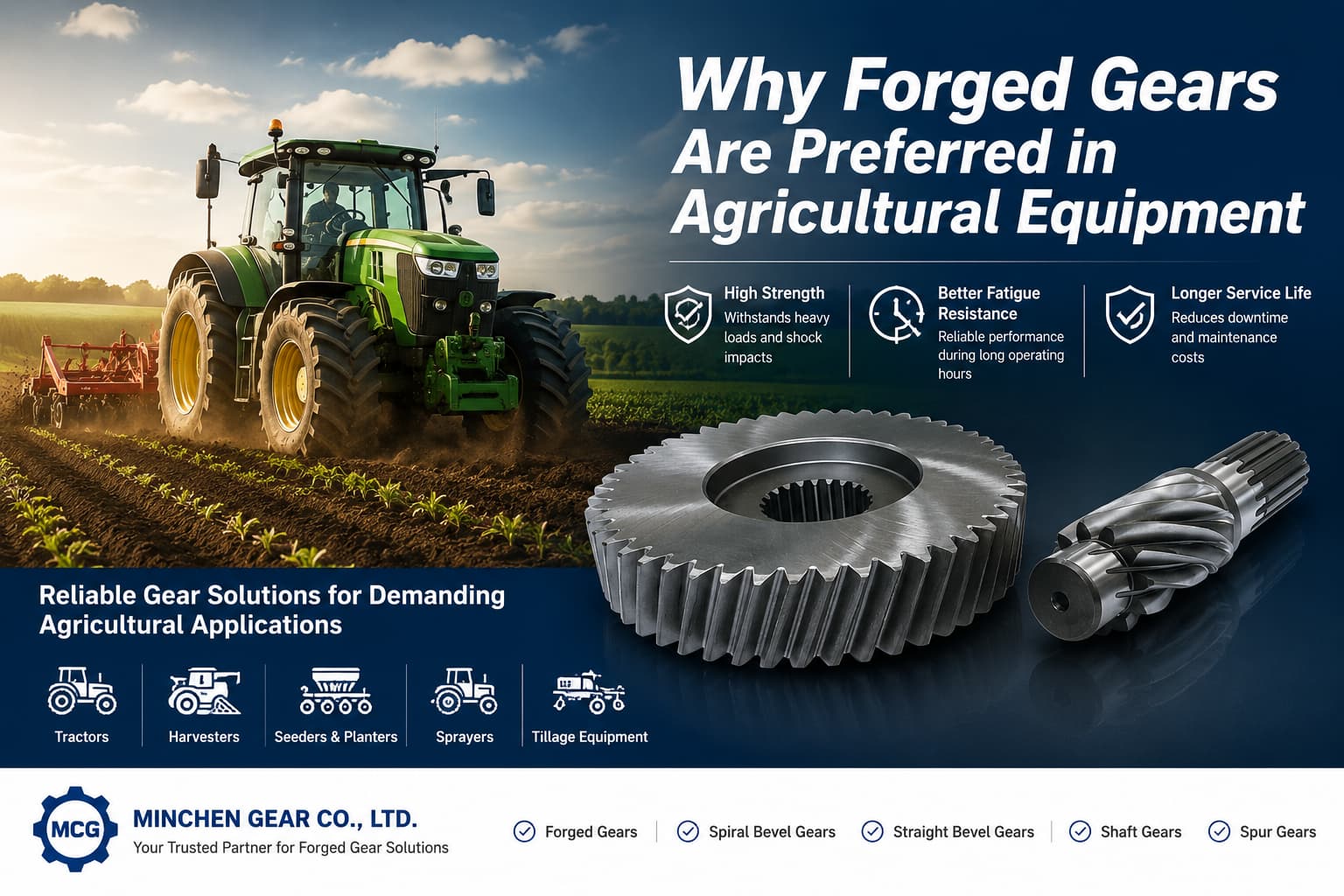
Why Forged Gears Are Preferred in Agricultural Equipment
2026.06.11
In this article, we'll explore why forged gears have become the preferred choice for agricultural equipment and how they contribute to longer service life and greater operational efficiency.
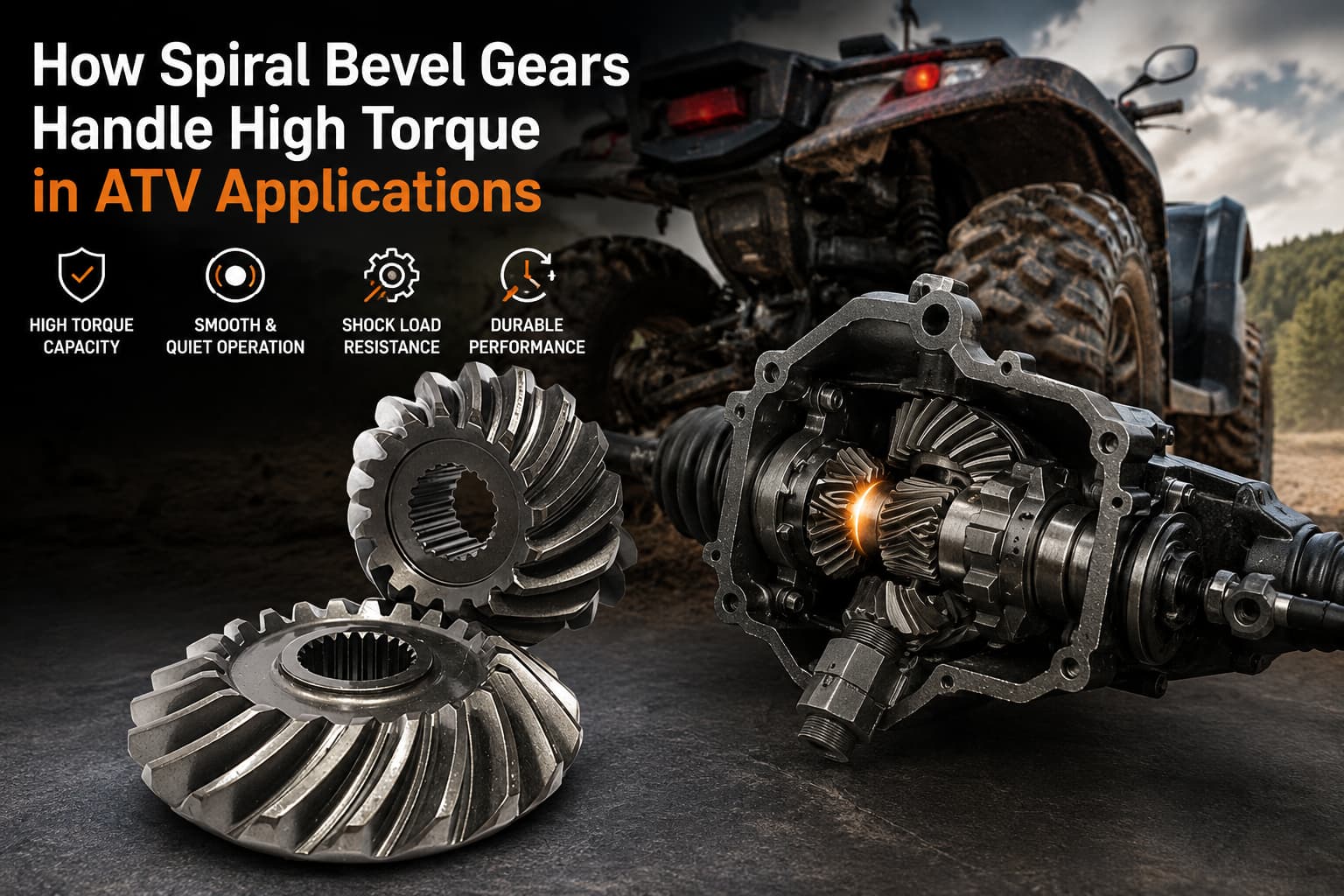
How Spiral Bevel Gears Handle High Torque in ATV Applications
2026.05.22
Modern ATV drivetrain systems operate under extremely demanding conditions, including high shock loads, steep torque transmission angles, off-road impacts, and continuous load fluctuations.
For ATV differential systems and final drives, gear durability and tooth contact accuracy directly affect torque transmission efficiency, drivetrain noise, off-road reliability, gear lifespan, and vehicle stability.
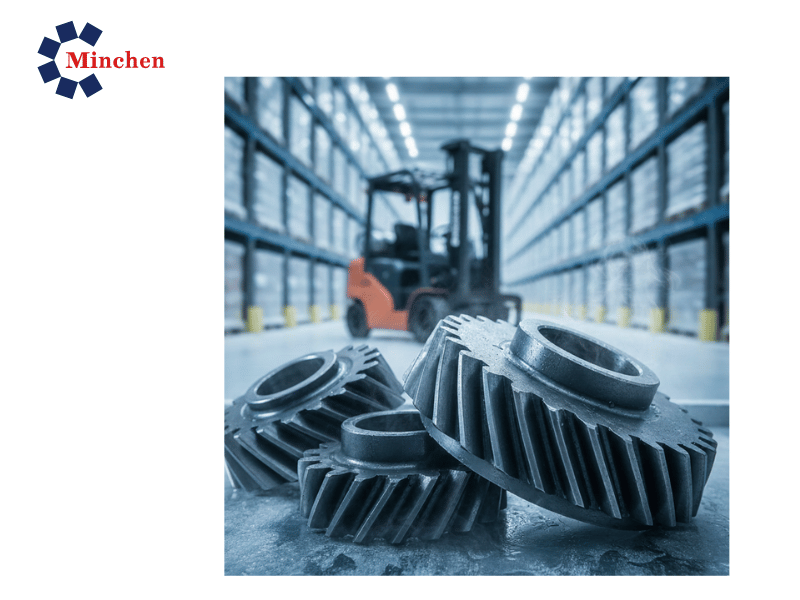
Cold Chain Logistics Challenges: Engineering Forklift Differential Gears for Extreme Sub-Zero Reliability
2025.12.22
In the wake of the global expansion in pharmaceutical distribution and high-end perishables, cold chain logistics has evolved into a high-stakes industry. Modern warehouses now operate at sustained temperatures as low as -20°C to -40°C to preserve the integrity of vaccines and food supplies. However, these extreme thermal conditions are notoriously hostile to mechanical components. For material handling equipment, particularly electric forklifts, the primary risk is "low-temperature brittleness," a phenomenon where high-strength steel loses its impact resistance and becomes prone to catastrophic failure under load.