

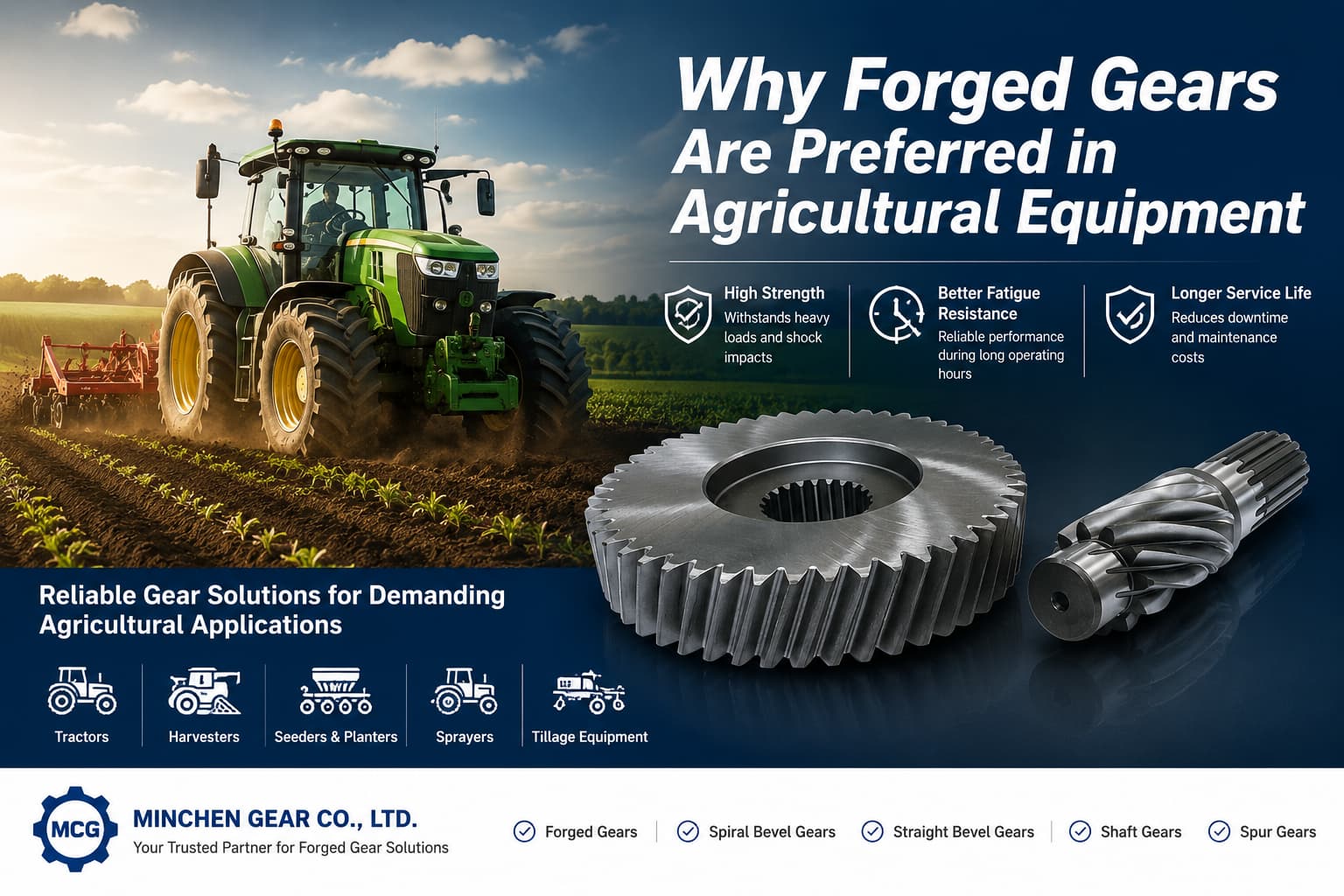
Why Forged Gears Are Preferred in Agricultural Equipment
Introduction
Agricultural machinery operates in some of the harshest working environments of any industry. Tractors, harvesters, balers, seeders, sprayers, and other farm equipment are routinely exposed to heavy loads, shock impacts, dust, mud, moisture, and long operating hours. Under these demanding conditions, the reliability of every drivetrain component is critical—especially the gears responsible for transmitting power throughout the machine.
For this reason, many agricultural equipment manufacturers choose forged gears over alternative manufacturing methods. Thanks to their superior strength, fatigue resistance, and durability, forged gears help agricultural machinery maintain performance while reducing downtime and maintenance costs.
In this article, we'll explore why forged gears have become the preferred choice for agricultural equipment and how they contribute to longer service life and greater operational efficiency.
The Challenges Faced by Agricultural Equipment
Unlike machines operating in controlled factory environments, agricultural equipment must perform under constantly changing field conditions. Gear systems are often subjected to:
- Heavy torque loads during tilling and plowing
- Sudden shock loads caused by rocks or uneven terrain
- Continuous operation during planting and harvesting seasons
- Exposure to dirt, dust, water, and agricultural chemicals
- Frequent load fluctuations depending on crop density and soil conditions
These challenges require gears that can withstand extreme mechanical stress without premature wear or failure.
What Makes Forged Gears Different?
Forging is a manufacturing process that shapes heated metal under high pressure. Unlike casting, which pours molten metal into a mold, forging compresses and forms the material, creating a refined internal grain structure.
This process offers several key advantages:
Improved Grain Flow
During forging, the metal's grain structure follows the shape of the component. This continuous grain flow improves strength and reduces weak points within the gear.
Higher Material Density
Forged gears contain fewer internal voids and porosity compared to cast gears. The result is a denser and stronger component capable of handling higher loads.
Enhanced Mechanical Properties
Forging improves:
- Tensile strength
- Yield strength
- Impact resistance
- Fatigue resistance
- Toughness
These properties are essential for agricultural machinery operating under heavy-duty conditions.
How Forged Gears Address Agricultural Equipment Challenges
The advantages of forged gears become especially apparent when applied to agricultural machinery. Farming equipment operates under a unique combination of heavy loads, continuous operation, and unpredictable field conditions. Components must not only deliver power efficiently but also withstand years of demanding service with minimal downtime.
Because the forging process improves grain flow, material density, and overall mechanical properties, forged gears are better equipped to handle the challenges commonly encountered in agricultural applications. The following benefits explain why agricultural equipment manufacturers continue to favor forged gears for critical drivetrain and power transmission systems.
1. Superior Resistance to Shock Loads
Agricultural equipment frequently encounters unexpected impacts during operation.
For example:
- A tractor may strike hidden rocks while plowing.
- A harvester may experience sudden load changes when processing dense crops.
- A rotary tiller may encounter hard soil conditions.
These situations create shock loads that can damage weaker gears.
Forged gears provide superior impact resistance because their refined grain structure helps distribute stress more evenly throughout the component. This reduces the likelihood of tooth cracking, chipping, or catastrophic gear failure.
As a result, forged gears are widely used in:
- Tractor transmissions
- Final drive systems
- Differential gear sets
- PTO (Power Take-Off) systems
- Harvesting equipment drivetrains
2. Better Fatigue Strength for Long Operating Hours
Agricultural machinery often operates continuously for extended periods during planting and harvesting seasons.
A gear may experience millions of load cycles throughout its service life. Over time, repeated loading can lead to fatigue cracks that eventually cause gear failure.
One of the biggest advantages of forged gears is their excellent fatigue resistance.
Compared to cast or machined gears, forged gears feature:
- More uniform grain structure
- Reduced internal defects
- Improved stress distribution
This allows them to withstand repeated loading cycles without developing fatigue cracks as quickly.
For farm equipment manufacturers, this means:
- Longer service intervals
- Lower maintenance costs
- Increased machine reliability
3. Higher Torque Capacity
Modern agricultural machinery continues to become larger and more powerful.
Today's tractors, combines, and self-propelled sprayers generate significantly more horsepower than previous generations. This increased power output requires drivetrain components capable of transmitting greater torque.
Forged gears are particularly well-suited for high-torque applications because they possess:
| Performance Factor | Forged Gears | Cast Gears |
|---|---|---|
| Tensile Strength | High | Moderate |
| Impact Resistance | Excellent | Good |
| Fatigue Resistance | Excellent | Moderate |
| Torque Capacity | High | Moderate |
| Service Life | Long | Medium |
The ability to handle high torque without deformation makes forged gears a preferred solution for heavy-duty agricultural transmissions.
4. Improved Durability in Harsh Environments
Agricultural equipment must operate in environments filled with:
- Dust
- Mud
- Moisture
- Fertilizers
- Chemicals
- Temperature fluctuations
These conditions can accelerate gear wear and corrosion.
Forged gears can be combined with advanced heat treatment processes such as:
- Carburizing
- Induction hardening
- Nitriding
These treatments create a hard, wear-resistant surface while maintaining a tough core.
The result is:
- Longer gear life
- Better wear resistance
- Improved reliability in demanding field conditions
This durability helps equipment owners reduce repair costs and maximize machine uptime.
5. Lower Total Cost of Ownership
Although forged gears may have a higher initial manufacturing cost compared to some alternatives, they often provide a lower total cost of ownership over the life of the equipment.
Benefits include:
- Reduced downtime
- Fewer gear replacements
- Lower maintenance expenses
- Longer service intervals
- Improved machine productivity
For commercial farming operations, equipment availability is critical. Unexpected failures during planting or harvesting seasons can result in costly delays.
By investing in forged gears, manufacturers can provide equipment that delivers dependable performance year after year.
Real-World Gear Solutions for Agricultural Machinery
Agricultural machinery relies on a wide variety of gear types, each designed to perform a specific power transmission function within the machine. Depending on the application, manufacturers may require gears that can withstand high torque loads, operate reliably under shock conditions, or provide smooth power transfer between shafts.
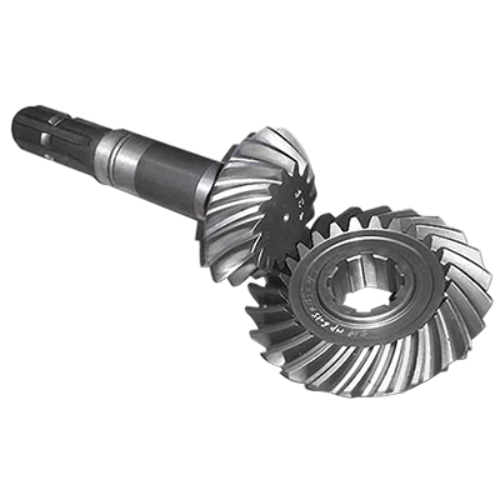
At Minchen Gear Co., Ltd., we have extensive experience manufacturing gears for agricultural machinery applications. Our product portfolio includes several gear solutions that are widely used throughout the agricultural equipment industry.
Forged Gears
Forged gears are commonly used in heavy-duty agricultural drivetrains where high strength and fatigue resistance are essential. Applications include tractor transmissions, final drives, and power take-off (PTO) systems.
Spiral Bevel Gears
Spiral bevel gears provide smooth and efficient power transmission between intersecting shafts. Their gradual tooth engagement helps reduce noise and vibration while maintaining high torque capacity, making them suitable for agricultural gearboxes, differential systems, and PTO units.
Straight Bevel Gears
Straight bevel gears are widely used in agricultural equipment that requires reliable right-angle power transmission. Their simple design and cost-effectiveness make them a practical solution for many farm machinery applications.
Bevel Gears
Bevel gears are commonly used in machinery that requires power transfer between intersecting shafts. Their versatility makes them suitable for a wide range of agricultural drive systems.
Shaft Gears and Spur Gears
Shaft gears and spur gears are frequently found in seeders, planters, harvesting equipment, and various mechanical drive systems where accurate speed transmission and dependable operation are required.
By supplying multiple gear types for agricultural machinery manufacturers, Minchen Gear has accumulated extensive experience in helping customers develop reliable power transmission systems capable of withstanding demanding field environments and long operating cycles.
Common Agricultural Applications for Forged Gears
Forged gears are commonly found in:
Tractors
- Transmission systems
- Differential gears
- Final drives
- PTO drives
Harvesters
- Header drive systems
- Grain handling mechanisms
- Transmission assemblies
Seeders and Planters
- Metering drives
- Power transmission systems
Sprayers
- Drive units
- Pump systems
Tillage Equipment
- Rotary tillers
- Cultivators
- Soil preparation machinery
These applications demand the strength and reliability that forged gears provide.
Why Agricultural Equipment Manufacturers Choose Minchen Gear
At Minchen Gear Co., Ltd., we specialize in manufacturing high-quality forged gears for demanding industrial applications.
Our capabilities include:
- Forged bevel gears
- Straight bevel forged gears
- Spiral bevel gears
- Hypoid forged gears
- High Ratio Hypoid (HRH) gears
Using advanced manufacturing equipment and rigorous quality control processes, we produce gears that meet the performance requirements of agricultural machinery manufacturers worldwide.
Whether for tractors, harvesters, PTO systems, agricultural gearboxes, or heavy-duty drivetrains, Minchen Gear provides reliable solutions designed for long service life and consistent performance.
Frequently Asked Questions (FAQ)
1. Why are forged gears better than cast gears for agricultural equipment?
Forged gears have a denser internal structure, superior fatigue resistance, and higher impact strength than cast gears. These advantages make them better suited for agricultural machinery operating under heavy loads and harsh field conditions.
2. What agricultural machines commonly use forged gears?
Forged gears are widely used in tractors, harvesters, seeders, planters, sprayers, tillage equipment, PTO systems, and agricultural gearboxes where high torque and durability are required.
3. Can forged gears handle high-torque applications?
Yes. Forged gears offer excellent tensile strength and load-bearing capacity, making them ideal for modern agricultural equipment with increasing horsepower and torque requirements.
4. What materials are commonly used for forged gears?
Common materials include alloy steels such as SCM420, SCM440, 4140, and 4340. These materials can be further enhanced through heat treatment processes to improve wear resistance and fatigue strength.
5. How do heat treatments improve forged gear performance?
Processes such as carburizing, nitriding, and induction hardening increase surface hardness while maintaining a tough core, improving wear resistance, load capacity, and service life.
6. Does forging reduce gear maintenance costs?
Yes. Because forged gears typically last longer and resist wear, fatigue, and shock damage better than alternative gear types, they can significantly reduce maintenance, replacement, and downtime costs.
Conclusion
Agricultural equipment operates under some of the toughest conditions in modern industry. To withstand heavy loads, shock impacts, long operating hours, and harsh environments, manufacturers need gears that deliver exceptional strength and reliability.
Forged gears have become the preferred choice because they offer superior fatigue resistance, higher torque capacity, greater impact strength, and longer service life compared to many alternative manufacturing methods.
As agricultural machinery continues to evolve toward higher power and greater productivity, forged gears will remain a critical component in ensuring reliable and efficient power transmission.
Contact Us
Looking for a trusted supplier of forged gears for agricultural equipment?
Minchen Gear Co., Ltd. provides precision-engineered forged bevel gears, spiral bevel gears, hypoid gears, and custom gear solutions for agricultural machinery manufacturers worldwide. Contact us today to discuss your project requirements and discover how our gear manufacturing expertise can support your next application.