

How the Forging Process Enhances Gear Strength and Performance
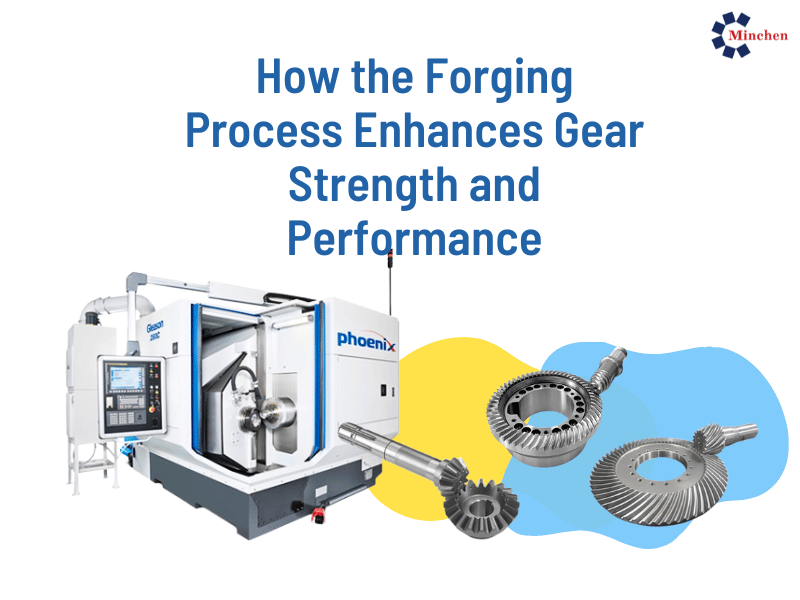
In the world of power transmission, gears are vital components that must endure extreme loads, fluctuating temperatures, and long operational cycles. The manufacturing method used to produce these gears has a direct impact on their performance, lifespan, and reliability. Among all available methods, forging stands out as one of the most robust processes for producing high-performance gears.
This article explores how the forging process enhances gear strength and performance, making it the preferred choice for critical applications in industries such as automotive, heavy machinery, aerospace, and energy.
1. What Is Gear Forging?
Gear forging is a manufacturing process where metal is heated and shaped under high pressure using dies or presses to form near-net-shape gear blanks. The forging process aligns the internal grain structure of the metal, significantly improving its mechanical properties compared to casting or machining from bar stock.
There are two main types of forging for gears:
- Open-die forging (used for large components)
- Closed-die forging (used for precision components with tight tolerances)
The forged blank can then be machined and heat treated to reach the final gear dimensions and specifications.
2. Grain Flow Alignment Improves Fatigue Resistance
One of the most important benefits of forging is the alignment of grain flow along the shape of the gear teeth. This alignment enhances the gear’s resistance to fatigue and fracture under repeated loading.
Unlike machining or casting—which cuts across or disrupts grain flow—forging refines the metal’s microstructure, producing a continuous, uninterrupted grain path. This results in:
- Higher fatigue strength
- Greater toughness under cyclic loads
- Reduced risk of tooth breakage or failure
This is particularly crucial in automotive differentials, industrial gearboxes, and off-road vehicle transmissions where gears are exposed to constant torque reversals and impacts.
3. Higher Density and Strength Than Cast Gears
Forged gears are denser and stronger than their cast counterparts due to the absence of porosity and voids commonly found in casting processes.
Key benefits include:
- Increased tensile and yield strength
- Superior impact resistance
- Improved ductility and load-bearing capacity
For example, forged gears made from alloy steels such as SCM440 or 4340, when combined with proper heat treatment, can exceed the performance limits of cast iron or powder metal gears by a wide margin.
4. Better Dimensional Stability After Heat Treatment
Heat treatment is essential in gear manufacturing to harden the tooth surface while maintaining a tough core. Forged gears offer better dimensional stability during heat treatment compared to machined gears.
Why? Because:
- The internal stress is more evenly distributed in forged parts.
- Grain refinement during forging leads to more predictable transformation during quenching and tempering.
- Less distortion means tighter tolerances and less rework after heat treatment.
This is especially important in high-precision applications such as machine tool drives or robotics, where backlash and noise must be minimized.
5. Cost-Efficiency for High-Volume Production
Although forging may involve higher initial tooling costs (especially for closed-die forging), it becomes highly cost-effective for medium to high production volumes due to:
- Lower material waste compared to machining from bar stock
- Faster production cycles once dies are ready
- Reduced need for secondary operations (thanks to near-net-shape forming)
This makes forged gears an economical and performance-optimized choice for industries like automotive, where millions of units are produced annually under strict quality controls.
6. Enhanced Wear and Surface Properties
Forged gears can undergo surface hardening treatments such as:
- Carburizing
- Induction hardening
- Nitriding
These treatments, when applied to a forged gear blank with an already strong and ductile core, create an ideal balance between surface hardness (for wear resistance) and core toughness (for shock absorption).
The result: longer gear life, lower maintenance costs, and improved overall system reliability.
Conclusion: Why Choose Forged Gears?
In demanding environments where gear failure is not an option, forged gears offer a powerful combination of strength, precision, and reliability. Their superior fatigue resistance, enhanced grain structure, and better dimensional stability make them the go-to solution for manufacturers seeking long-term performance.
If your application involves high torque, dynamic loads, or long duty cycles, choosing forged gears—especially those made with modern CNC finishing and heat treatment techniques—can make a measurable difference in system performance and operating cost.
Looking for a trusted forged gear supplier?
At Minchen Gear Co., Ltd., we specialize in forged spiral bevel, straight bevel, and hypoid gears using high-grade alloy steels, advanced GLEASON/KLINGELNBERG machining, and rigorous quality inspection. Contact us today to learn how our custom-forged solutions can boost your product's durability and efficiency.